

Adapting treatment to the patient: Diana Carrasco Rojas works to make radiation therapy safer
October 20, 2026
For Diana Carrasco Rojas, the path to medical physics has always been personal.
Growing up in a small town in Chihuahua, Mexico, she found an early role model — her aunt, a medical physicist who also helped support her family.
“Watching her, I knew early on that I wanted to follow in her footsteps.”
Her interest in medical physics became more closely connected to her own family in high school, when her mother was diagnosed with a meningioma, a brain tumor that was successfully removed. With money left from a loan she had taken out, her mother was able to pay for Carrasco Rojas’ first year of college — an investment that helped set her on the path to medical physics.
College became a possibility when her mother’s work eventually took her to Juárez, across the border from El Paso, Texas. The University of Texas at El Paso’s (UTEP) support for students from Mexico offered Carrasco Rojas and her sister a path to higher education in the U.S., eventually leading Carrasco Rojas to the UT MD Anderson UTHealth Houston Graduate School of Biomedical Sciences, where she is now a PhD student in the Medical Physics Program.
Making advanced radiation therapy safer
Now, Carrasco Rojas is working on a problem with implications for patients far beyond Houston: how to ensure an advanced form of radiation therapy can be delivered safely and consistently in clinical trials.
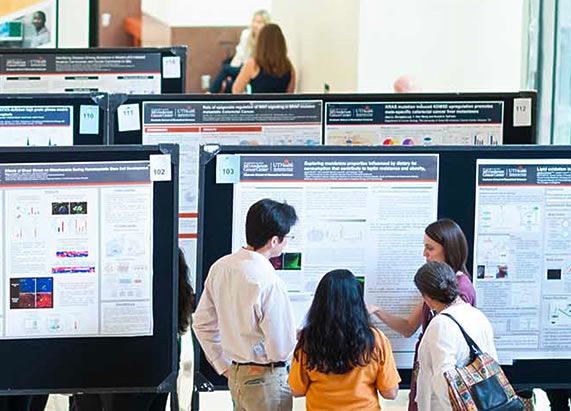
Carrasco Rojas received first place and the People’s Choice Award in the Post-candidacy PhD Elevator Pitch Contest at Graduate Student Research Day (GSRD) earlier this year for her 90-second presentation of this research.
Adaptive radiation therapy accounts for changes that can occur in a patient’s body over the course of treatment. Carrasco Rojas explains the concept by comparing it to something more familiar.
“Think about a tailored suit. If you lose weight, that suit doesn’t fit anymore and needs to be adjusted. The exact same thing happens during cancer treatment.”
As a tumor shrinks or a patient loses weight, the radiation treatment plan can be adjusted to match those changes.
“But unlike a suit, if our radiation fit is off by even just a few millimeters, we risk missing the tumor or damaging healthy organs.”
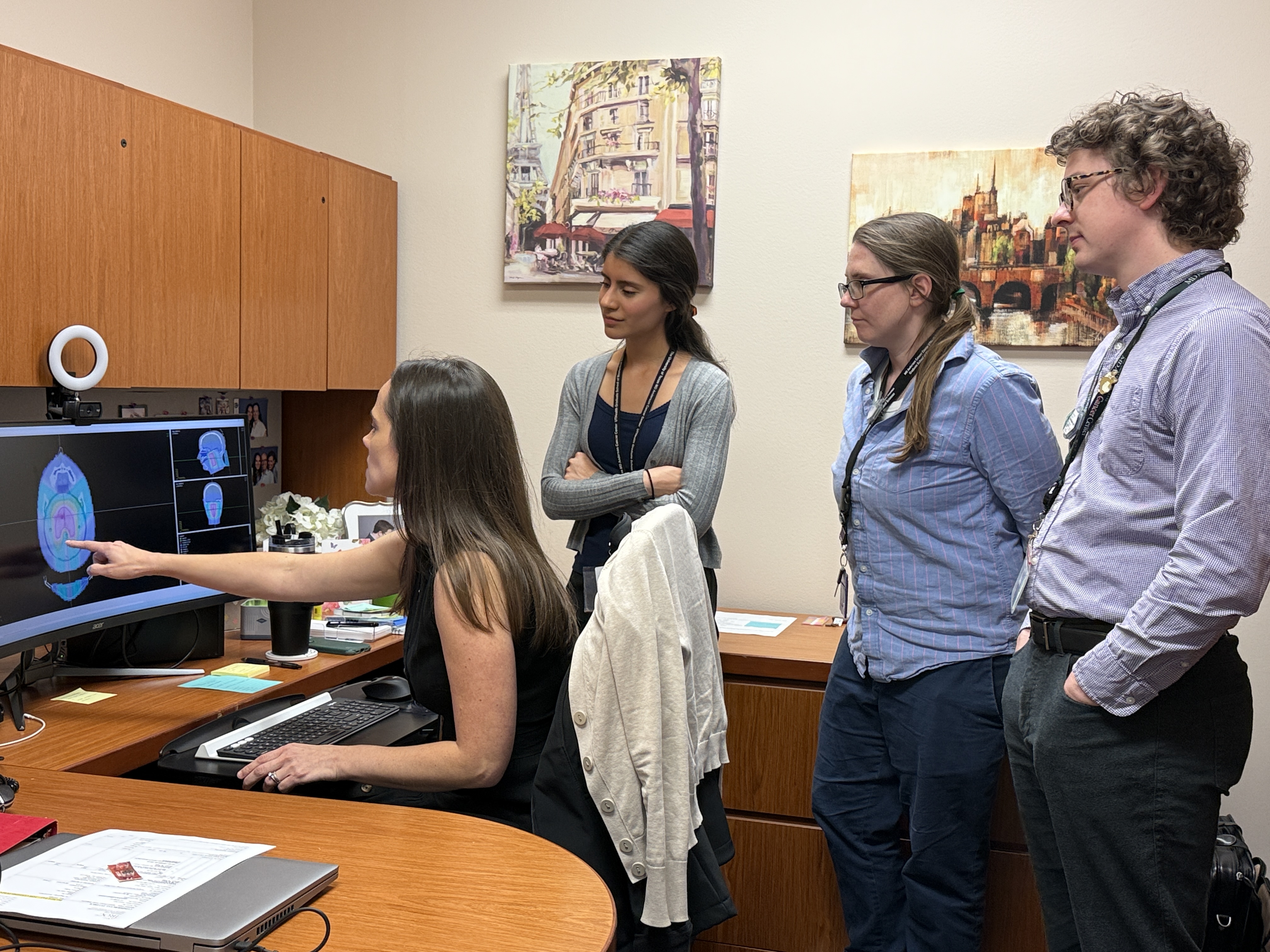
Working with her advisor, Paige Taylor, PhD, assistant professor in the Department of Radiation Physics at UT MD Anderson, Carrasco Rojas is helping develop an adaptive radiotherapy audit system for clinical trials. The testing tools, patient plan reviews and safety protocols she is developing are designed to help ensure patients receive high-quality treatment regardless of where they receive care.
“I love using science to make a direct impact on people’s lives. Radiotherapy is a powerful tool, but for patients to benefit safely, it has to be rigorously tested and regulated.”
 Learning in a collaborative environment
Carrasco Rojas said the resources and collaborative environment she has encountered during her three years at the Graduate School have helped shape both her research and her development as a scientist.
“Being in the middle of the largest medical center in the world means collaboration happens every single day. I am so grateful for my advisor, Dr. Paige Taylor, who is an amazing mentor both in research and in life.”
Working alongside her peers has shown her the value of different perspectives in solving complex technical problems, while giving her opportunities to contribute her own ideas and support in return.
The international community surrounding the Graduate School and Texas Medical Center has also resonated with Carrasco Rojas, whose connection to her own culture remains an important part of her life. Working with advisor and lab mates Mary Hadley and Hayden Scott.
“I am constantly amazed by how many people from all over the world come together here with a shared mission to improve patient care.”
Opening a path for others
Inspired by the graduate student who once mentored her, Carrasco Rojas serves as a Graduate School Student Ambassador, a role that has given her the opportunity to connect with prospective students at UTEP and help them navigate the application process.
Medical physics has become a family tradition. After Carrasco Rojas and her sister followed in their aunt’s footsteps, they have since inspired two younger cousins to pursue the field as well.
“We’re on our way to having a big family of women in medical physics!”
Carrasco Rojas’ commitment to encouraging others is grounded in the people and opportunities that helped her along the way — a grandmother who helped raise her, a mother and aunt who supported her ambitions, and the opportunities at UTEP that helped put medical physics within reach.
Her experiences now inform both the scientist Carrasco Rojas is becoming and her desire to reach students from similar backgrounds, showing them that while the path may be challenging, a future in science is possible.
The scientific elevator pitch challenges students to put their science communication skills to the test by explaining complex research for a broad audience in just 90 seconds.