

Fifty-two failures, one breakthrough: Building a legacy beyond the laboratory
July 17, 2026

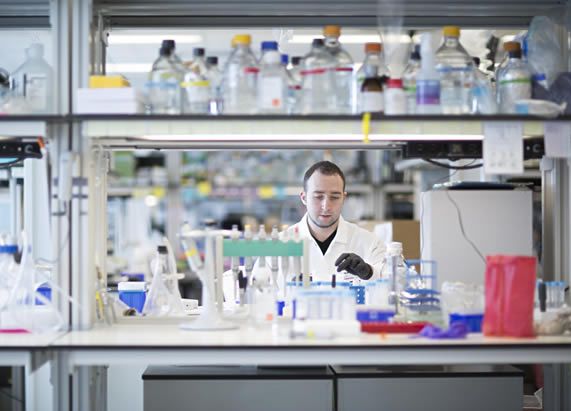
On Christmas Day in 1996, Jing-Ren Zhang, PhD ‘97, was exactly where he wanted to be—in the lab.
"No one else was there. It felt like the whole building belonged to me," recalled Zhang, then a trainee at The University of Texas MD Anderson Cancer Center UTHealth Houston Graduate School of Biomedical Sciences. "I enjoy doing these things. This is a life, not a job. It's like playing poker or ping-pong or chess; you get that positive, joyful feeling from it."
That enthusiasm for discovery helped sustain Zhang through more than a year of setbacks as he investigated how Lyme disease bacteria evade the immune system. He worked through 52 approaches that failed to provide the answers he sought.
The 53rd attempt changed everything.
A breakthrough led to the identification of the VlsE antigenic variation system, paving the way for diagnostic tests now used worldwide.
"It was what we call a eureka moment," recalled his mentor, Steven J. Norris, PhD, professor and vice chair of research in the Department of Pathology and Laboratory Medicine at McGovern Medical School at UTHealth Houston. "We started jumping up and down in my office."
The persistence that led to that breakthrough was shaped long before Zhang ever entered a laboratory. Growing up in rural China, he endured significant hardship.
"We were starving for many years," Zhang said. "Even now, I don't pay too much attention to the flavor of food. If your threshold is low, almost everything will make you happy."
That perspective has helped him pursue science with patience, humility, and resilience.
"One of my strengths is that I'm happy with uncertainty," Zhang said. "If something isn't sure, I'm still willing to go after it. Even if I fail, that's an acceptable result."
"My confidence really grew working with Steve," Zhang said.
More than three decades after joining Norris’s lab, Zhang still calls him "professor." He still seeks Norris’s advice on everything from career guidance to grammar questions.
That relationship—built on mentorship, trust, and a shared commitment to discovery—would help shape not only their scientific work, but the impact they hoped that work would have beyond the laboratory.
When it came time to commercialize their discovery, Zhang and Norris were guided by the same principle that had defined their partnership: helping others. Rather than pursuing an exclusive licensing agreement, which would have been more lucrative for them, they allowed multiple companies to develop diagnostic tests.
Their goal was to maximize the impact of the discovery rather than limit access to it. Ultimately, 15 companies licensed the technology, helping lower testing costs and expand access while driving innovation throughout the field.
Years later, that same commitment to creating opportunities for others inspired another joint endeavor. Zhang and his wife, Daimin Zhao, and Norris and his wife, Deborah, started three endowments supporting student training, research, and innovation at UTHealth Houston: the Pathology Education and Research Endowment, the UTHealth Houston Microbiology Education Fund, and the Pioneer Endowment for Innovation.
"The idea for our donations is to open new opportunities for others that didn't exist before," Norris said.
What surprised Zhang most, however, was how the experience affected his own life.
"This has been a gift to ourselves, too," he said. "It's a great honor to have resources to give to the next generation.”
It has inspired Zhang to become more intentional about helping others, including supporting his siblings in rural China in ways that honor the memory of their parents.
"I'm a better person than I was before because of philanthropy," he said.
More than three decades after spending Christmas Day alone in a laboratory pursuing an uncertain idea, he sees those endowments as another investment in discovery—not only in the breakthroughs yet to come, but in the people who will make them possible.