

Jian Hu, PhD, and Claire Singletary, MS, CGC, honored for mentorship, leadership and service to the Graduate School
October 08, 2026
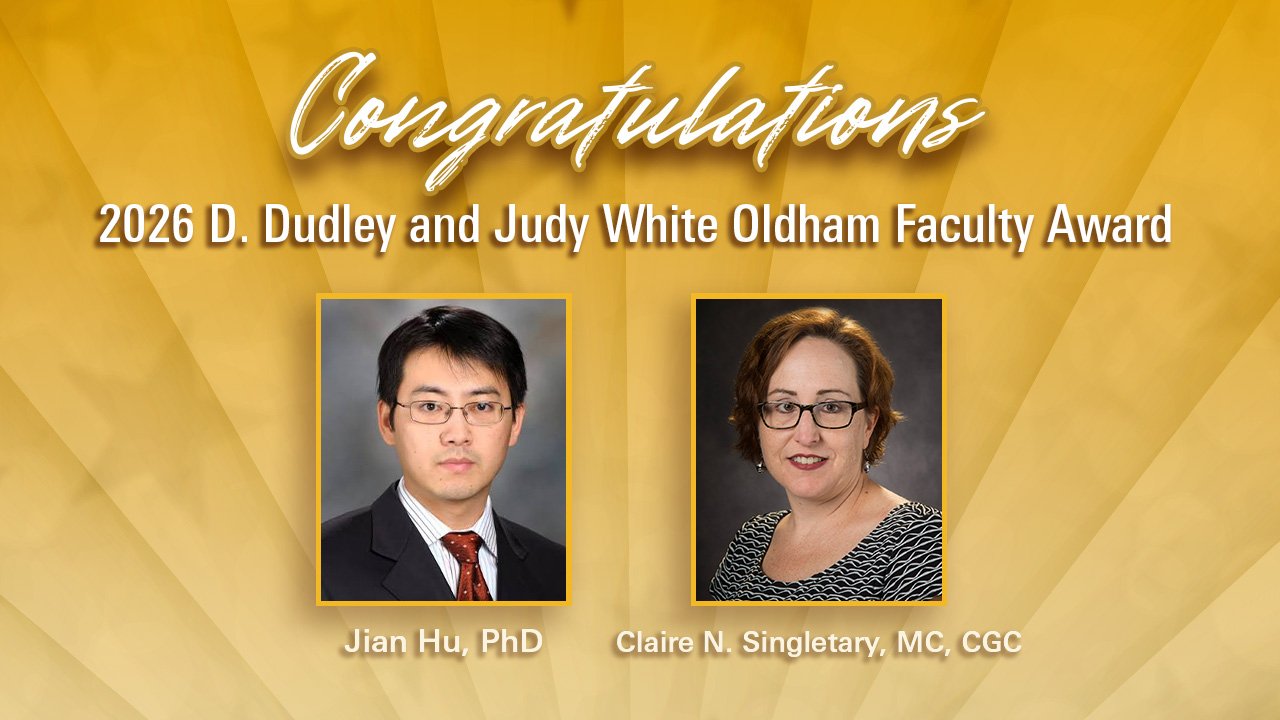
Jian Hu, PhD, and Claire N. Singletary, MS, CGC, were named recipients of the 2026 D. Dudley and Judy White Oldham Faculty Award at The University of Texas MD Anderson Cancer Center UTHealth Houston Graduate School of Biomedical Science Graduate School’s recent faculty meeting.
Established in 2018 by D. Dudley and Judy White Oldham, the annual award recognizes Graduate School faculty members for excellence in leadership, service and mentorship.
For Hu and Singletary, the recognition reflects a commitment they share across their different areas: helping students develop the confidence, independence and skills to find their own paths.
Jian Hu, PhD: Helping students recognize their potential
Hu, professor in the Department of Cancer Biology at UT MD Anderson, joined the Graduate School faculty in 2014. He has graduated five PhD students and currently mentors approximately 10 trainees in his laboratory, in addition to serving on student advisory and examining committees. He previously served as program director for the Graduate School’s Cancer Biology Program.
“This award is especially meaningful because it recognizes the part of academic life that brings me the greatest joy: helping students recognize their potential and grow into confident, independent scientists.”
His own mentors helped shape that approach.
“Mentorship taught me that sometimes the most important thing a mentor can do is see potential in someone before that person can see it in themselves. My mentors challenged me, trusted me with ambitious questions, and gave me the independence to develop my own scientific voice.”
Hu brings that philosophy to both his laboratory and the classroom. Rather than simply teaching students what is already known, he encourages them to question established ideas and trust their own observations.
Once students recognize the value of their ideas “the entire classroom becomes more engaged and intellectually adventurous.”
That exchange also makes him a better scientist and educator.
“My trainees constantly introduce me to new perspectives, challenge my assumptions, and remind me that there is no single approach to becoming a successful scientist.”
Hu’s laboratory research team works at the intersection of cancer biology and neuroscience, studying how cells in the nervous system build, maintain and repair their membranes and how disruptions in those processes contribute to brain tumors, demyelinating diseases, and neurological damage caused by cancer therapy. They are investigating whether restoring pathways involved in lipid metabolism could help rebuild damaged myelin, improve immune responses against brain tumors and protect the nervous system during cancer treatment.
Early in his faculty career, Hu received advice that teaching could distract from publishing papers and securing grants. He chose a different path.
“I discovered that teaching and mentoring brought me profound joy. To me, teaching is not a distraction from being a scientist — it is one of the most important privileges of being one.”
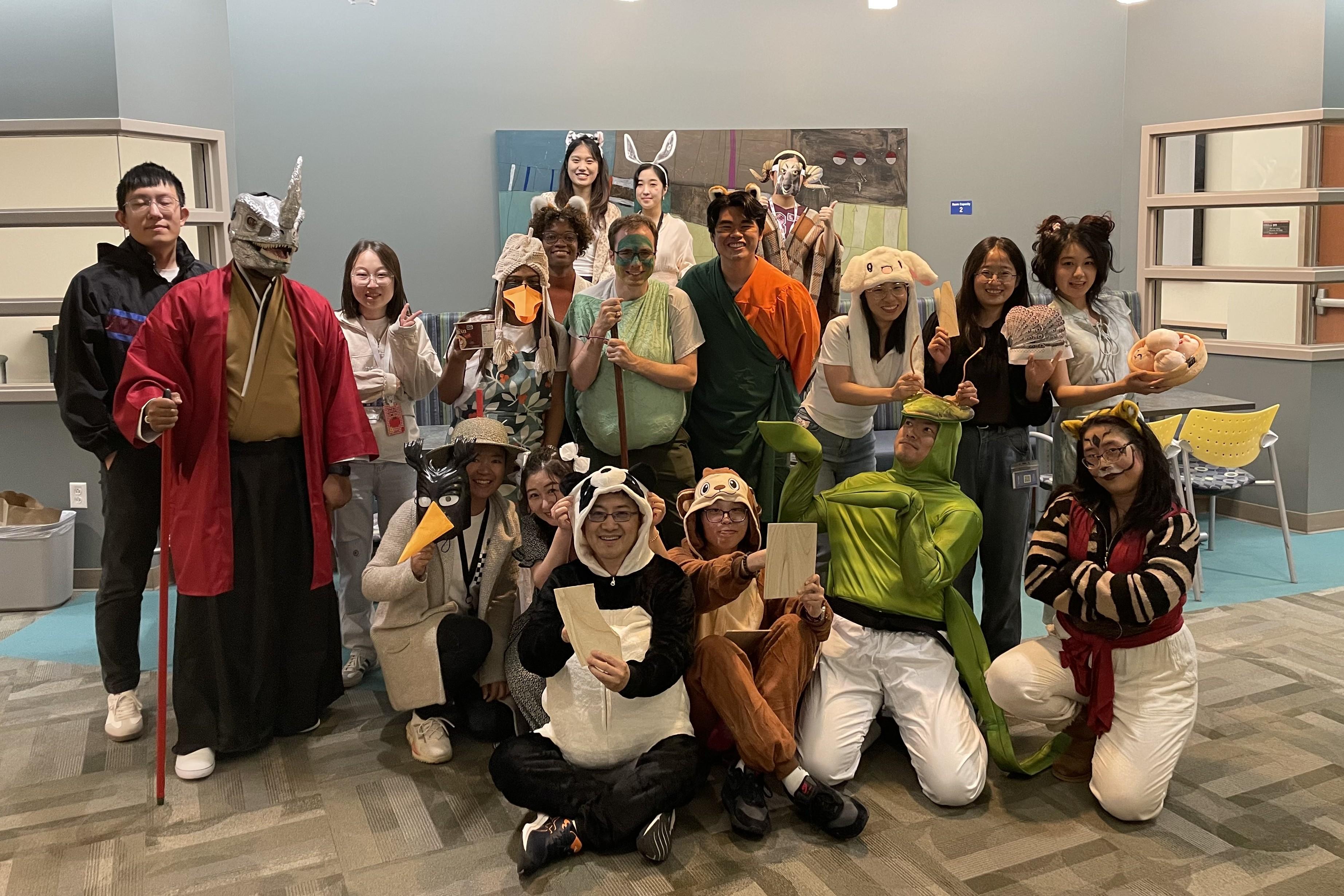
The Hu lab, first place winners of the 2025 Department of Cancer Biology Halloween Costume Competition.
Claire Singletary, MS, CGC: Mentorship that continues beyond graduation
Singletary, professor and director of the UT MD Anderson Cancer Center UTHealth Houston Graduate School of Biomedical Sciences Genetic Counseling Program, has been part of the Graduate School community for 20 years. Her mentorship spans the full arc of a student’s experience — from the beginning of training through the transition into a first position and, often, well into their career.
“I have spent my career dedicated to enhancing our program, serving GSBS, striving for excellence, mentoring students and faculty, and providing a supportive environment that sets our students up for success in their careers. To hear that you have made a difference in the careers of others is extremely rewarding. It is what we are here to do as educators.”
As Genetic Counseling Program director, Singletary provides formal guidance to students early in their training and throughout their second year as they prepare to enter the profession. But the relationship frequently continues after graduation.
“I hope this support allows graduates to become excellent clinicians, academicians and researchers, finding the path in the field that is the best fit for them.”
Her approach was shaped by mentors who supported her own development as a leader.
“Having strong mentors who believed in me and helped guide me as I stepped into various leadership roles was instrumental to my success. It is then incredibly important to pay that forward.”
That commitment extends to faculty and clinical supervisors. As one of Houston’s senior practicing genetic counselors, Singletary said she makes a point of encouraging colleagues and inviting them into leadership opportunities.
Alongside her educational leadership, Singletary provides direct patient care in the Department of Obstetrics, Gynecology and Reproductive Sciences at McGovern Medical School.
She works with prenatal and preconception patients to explain genetic screening and testing options, ultrasound findings and test results while addressing each patient’s individual and psychosocial needs. Her clinical work also gives Genetic Counseling Program students an opportunity to learn alongside her as she supervises them in patient care.
Singletary also has served the broader Graduate School community, including as a past president of the faculty.
“I am grateful for the support that our specialized master’s program receives from GSBS and for the opportunity to serve the larger GSBS community. I am honored to have received the Oldham award.”
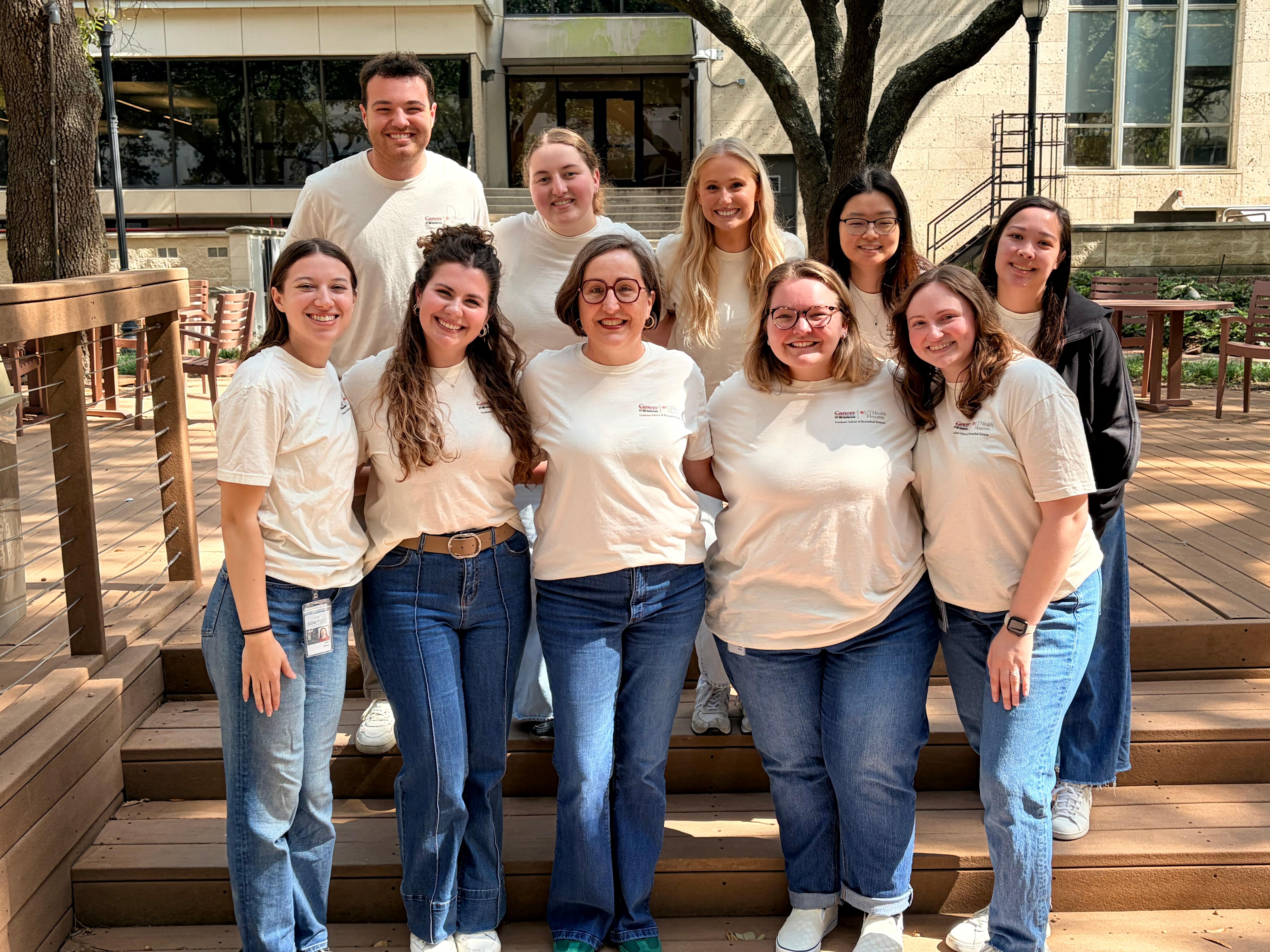
Singletary with second year Genetic Counseling student cohort.
A shared commitment to mentorship
Although Hu and Singletary mentor students in different disciplines and training environments, both describe mentorship as something that extends beyond teaching knowledge or technical skills. It is an opportunity to recognize potential, encourage independence and help trainees discover where their strengths can take them.
For Hu, the award ultimately belongs in large part to those trainees.