
Putting immunity to work: K M Salim (Opu) Andalib explores new approach to fighting cancer
October 05, 2026
What if lessons from the COVID mRNA vaccines could help scientists develop new ways to fight cancer?
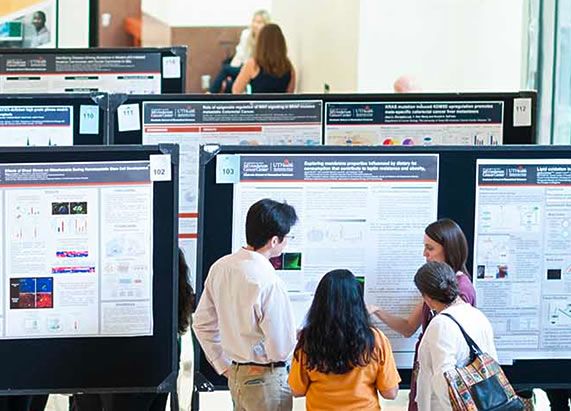
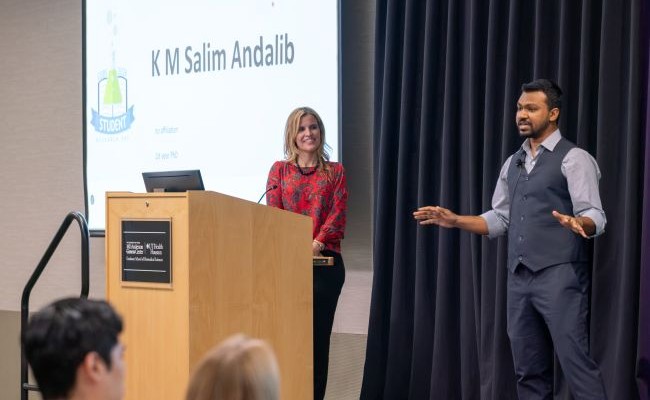
That question sits at the center of the pitch that earned K M Salim (Opu) Andalib first place in the Pre-candidacy PhD Elevator Pitch Contest at Graduate Student Research Day (GSRD) in July.
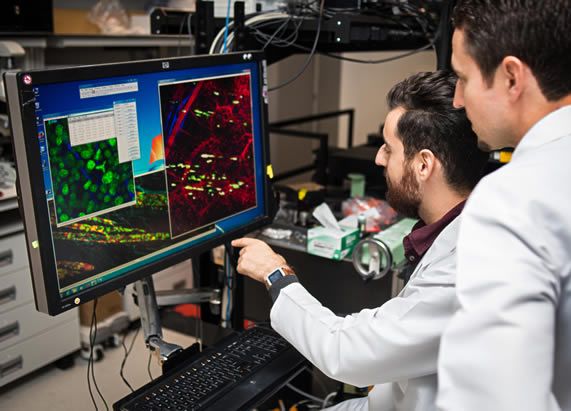
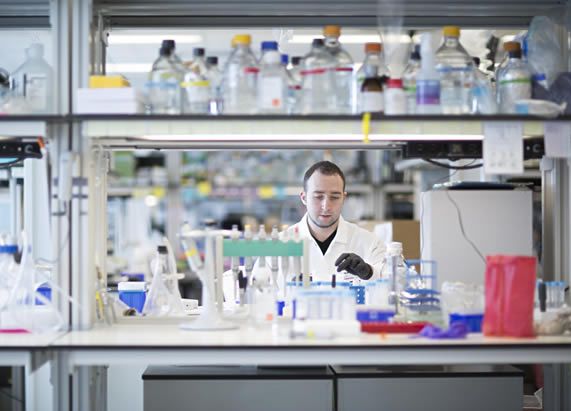
Andalib, a PhD student in the Cancer Biology Program at The University of Texas MD Anderson Cancer Center UTHealth Houston Graduate School of Biomedical Sciences (GSBS), conducts his research in the labs of Steven Lin, MD, PhD, and Adam Grippin, MD, PhD, in the Department of Radiation Oncology, UT MD Anderson.
“Our immune system is one of the most powerful cancer fighters we have. My research asks how to put it to work more effectively.”
Radiation can kill tumor cells, he explained, but may not generate a strong or lasting immune response.
Andalib is studying whether COVID mRNA vaccines can fill that gap by adding immune stimulation to the effect radiation already has on tumors. He is particularly interested in the mechanisms and timing behind that combination. Long term, he hopes this approach could lead to broadly applicable cancer treatments that are easier to adapt across tumor types and, potentially, more accessible to patients around the world, including countries where access to advanced cancer therapies is limited.
From Bangladesh to Houston: A growing commitment to cancer research
Andalib was born and raised in Bangladesh, where he studied Genetic Engineering at Khulna University and graduated with distinction. As an undergraduate, he studied how bacteria in the gut and the metabolites they produce might help protect against cancer. The experience sparked his interest in cancer biology and research with the potential to move toward translational science.
“I wanted a program that could give me a strong foundation in cancer biology while keeping me close to research that connects directly to patients. I felt GSBS would provide me the training, the research opportunities, and the collaborative environment I needed to grow as a cancer researcher.”
 The close relationship with UT MD Anderson stood out, because “it puts basic science and clinical research under the same roof, in constant conversation.
Also, being part of both UTHealth Houston and UT MD Anderson, he says, means having the training foundation of the Graduate School alongside one of the largest cancer research and clinical communities in the world.
“In the Texas Medical Center, you can feel the shared purpose everywhere you walk: everyone is working toward better patient care. That keeps me motivated, even on the hard days.”
Finding mentors, community, and room to grow
During his first year, rotations exposed Andalib to different areas of cancer research — and helped him realize that the scientific question was only part of choosing a dissertation lab. Andalib delivering his pitch at GSRD 2026.
“I learned to ask more than, ‘Is the science interesting?’ I wanted to know about the mentorship, the lab environment, and the people, and whether I could picture myself growing into the scientist I wanted to become.”
He found that combination with Lin and Grippin.
“They bring different, complementary perspectives, and learning from the two of them has shaped me in ways a single mentor couldn’t.”
Their different approaches have taught Andalib to look at scientific problems from multiple angles, something he also finds among his peers.
“Everyone brings a different background and a different way of seeing a problem, and that has shaped me as much as any experiment.”
That exchange goes both ways. Andalib has learned new techniques and approaches from colleagues while drawing on his own experience to help others plan experiments, work through papers, and make sense of complex data.
“The best science happens when people learn from one another.”
Building bridges
Beyond the lab, Andalib serves on the UTHealth Houston Student InterCouncil, representing the international student community and the Graduate School.
He also mentors undergraduate students in Bangladesh who are interested in pursuing higher education and research. He shares what he has learned and helps them find opportunities that can be hard to come by.
“These activities are a way to give back to the communities I belong to, and to lift up others while I grow myself.”
Off the clock
Outside of work, Andalib is a self-described simple-pleasures kind of person. He’s always hunting for a new Houston restaurant to try, plays soccer as a winger, and spends time with friends and family back in Bangladesh whenever he can.
The scientific elevator pitch challenges students to put their science communication skills to the test by explaining complex research for a broad audience in just 90 seconds.