

2026 Distinguished Alumna Yolanda (Yoli) Sanchez, PhD, on finding joy in others' success
July 07, 2026

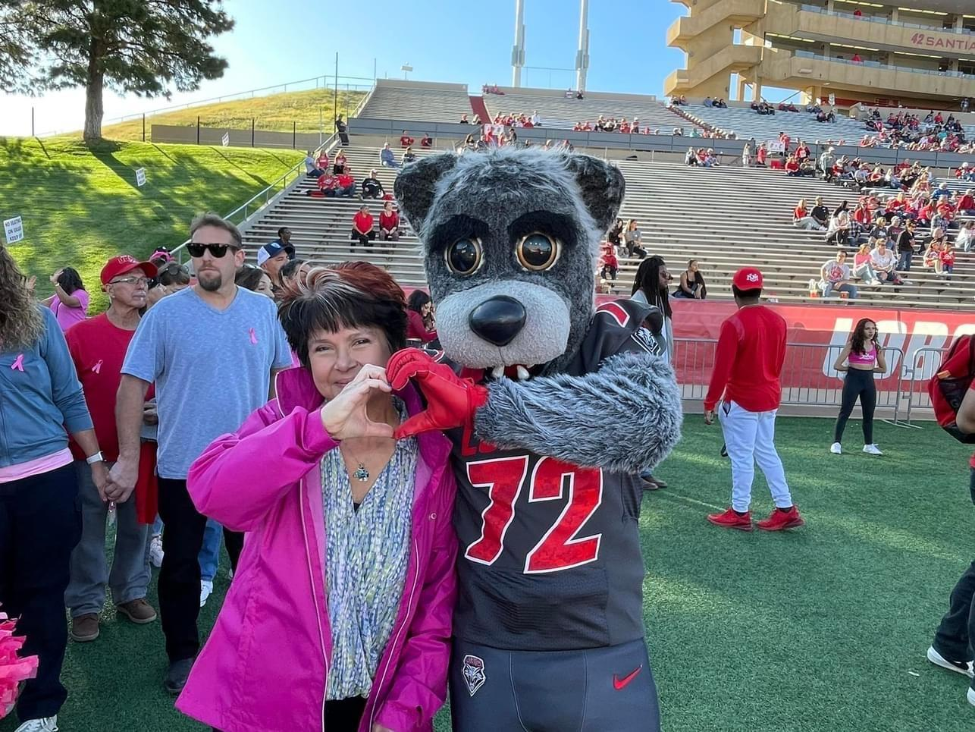
Yolanda (Yoli) Sanchez, PhD '93, has spent her career at the intersection of scientific discovery, cancer care, and leadership. Today, as director and CEO of the University of New Mexico Comprehensive Cancer Center (UNMCCC), designated by the National Cancer Institute (NCI), the Graduate School's 2026 Distinguished Alumna oversees an enterprise dedicated to advancing research, clinical care, and the next generation of scientists.
Over the course of her career, Sanchez has made internationally recognized contributions to understanding how cells respond to DNA damage, helping define checkpoint signaling pathways that continue to influence cancer biology and drug development.
Reflecting on how mentorship, resilience, and scientific curiosity shaped her journey, Sanchez said her greatest reward has shifted to the joy she experiences in seeing others succeed.
“When faculty tell me they’ve secured funding or opened a clinical trial, that’s where the excitement is now.”
A defining moment in discovery
Sanchez’s path in cancer research was shaped during her time in the Graduate School’s Human and Molecular Genetics program, where a pivotal experiment clarified her direction.
Working in the laboratory of her mentor, she studied how genetic material influences tumor growth. After years of uncertainty and experiments that did not yield clear answers, a single result changed everything.
“I walked into the research area, and the tumors were undetectable. That was it. I never looked back.”
That moment — seeing discovery translate into biological impact — cemented her commitment to cancer research and to understanding how DNA damage and repair pathways influence disease. It also set the course for a career marked by pioneering discoveries in the DNA damage checkpoint pathway. During her postdoctoral training in the laboratory of Stephen Elledge, PhD, Sanchez helped define key checkpoint kinase pathways that established how cells respond to DNA damage — work published in multiple Science papers and later recognized through the Albert Lasker Award given to Elledge. Her foundational work has influenced decades of research into genome stability and cancer therapeutics.
She went on to establish her own laboratory at the University of Cincinnati College of Medicine, where her research further advanced understanding of DNA damage response signaling and helped identify new therapeutic opportunities in cancer. Her innovative contributions to the field earned her recognition as a Pew Scholar in the Biomedical Sciences, and she was later recruited to Dartmouth, where she continued to expand her research program and mentor the next generation of scientists.
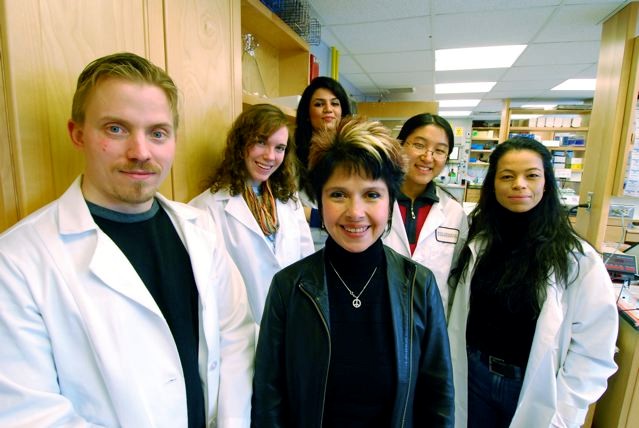
Sanchez with lab members at the Geisel School of Medicine at Dartmouth.
Mentorship that endures
Sanchez credits her graduate training not only for scientific rigor, but for shaping how she leads.
“I had a lot of independence from my mentor, but she was also very supportive. We worked side by side. I learned that one-on-one mentorship is incredibly important, no matter where your trainees go.”
That approach continues to guide her leadership today. Sanchez prioritizes supporting emerging scientists and helping them navigate their own paths.
From discovery to leadership to looking ahead
As Sanchez’s career progressed, her impact has evolved, with advice grounded in experience and perspective.
In 2023 she achieved a milestone that reflects the impact of her career, becoming “the first Latina woman to lead a comprehensive cancer center, and I won’t be the last.”
Today, as director and CEO of UNMCCC, she oversees all cancer research and clinical programs, spanning basic, translational, clinical, and population science while helping shape cancer care across New Mexico.
Sanchez emphasizes that uncertainty is a constant in science, but not a reason to step away from it.
“These cycles happen. If we had stopped during past challenges, we wouldn’t have the therapies we have today.”
She encourages resilience.
“If you’re asking the right questions, you’ll find a way to answer them. And always think about where the field will be in five years — that’s where you need to position yourself — find where you can make the greatest impact.”
A legacy of impact
Throughout her career, Sanchez has remained committed to mentorship, collaboration, and advancing cancer research. From pioneering discoveries in DNA damage signaling to leading UNMCCC, she has also become a nationally recognized advocate for education, mentoring, and developing future scientific leaders.
Former Graduate School Dean Michelle Barton, PhD, who nominated Sanchez for this honor, credits Sanchez’s longstanding commitment to education, mentorship, and scientific excellence as defining qualities throughout her career.
Sanchez recently established the first Emerging Leaders Program at UNMCCC, was elected to the Board of Directors of the American Association of Cancer Institutes and now serves as an External Advisory Board (EAB) member for 11 NCI-Designated cancer centers, serving as chair for two of these EABs.
“These are just a few of the many accomplishments that Yoli has achieved with her unwavering commitment to the highest standards of education, mentoring and training in the sciences,” said Barton.
Reflecting on her journey, Sanchez expressed deep gratitude for her training.
“I’m very grateful for the Graduate School, for my mentors, and for the support that helped shape my career.”
What began with a single breakthrough in graduate school has evolved into a career dedicated not only to advancing cancer research, but also to creating opportunities for others to do the same.