

Microbiology and Infectious Diseases student Melissa Martinez advances research on emerging fungal pathogen
March 19, 2026

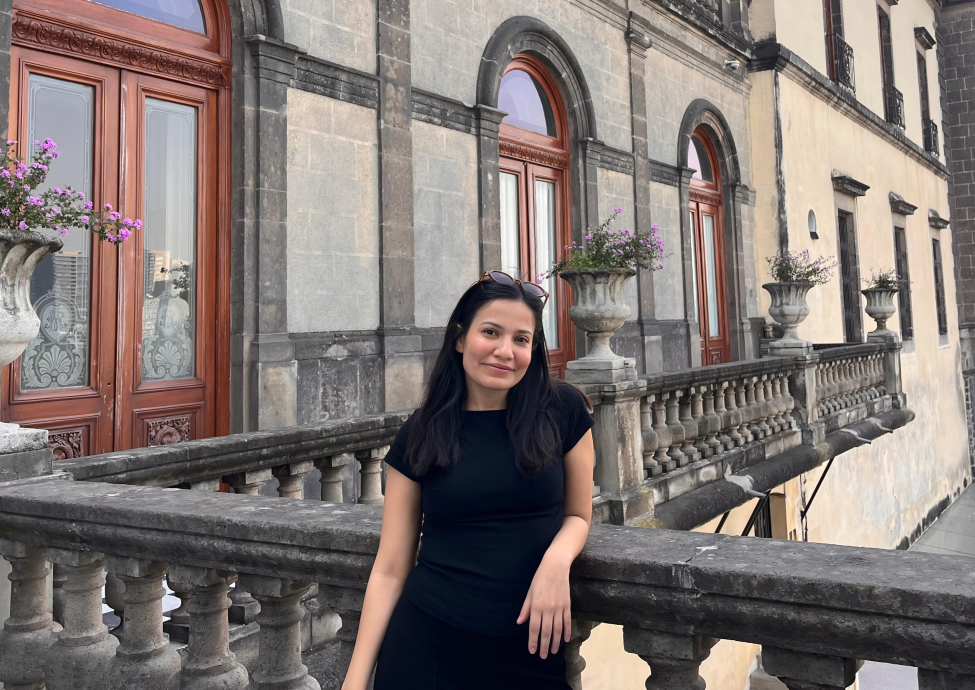
For as long as she can remember, science has shaped the way Melissa Martinez sees the world. What began as childhood curiosity — collecting insects and digging up worms in her parents’ backyard — eventually led her to the Microbiology and Infectious Diseases program at The University of Houston MD Anderson Cancer Center UTHealth Houston Graduate School of Biomedical Sciences (GSBS), where she studied emerging fungal pathogens and explores new ways to understand infectious disease.
“I was fascinated by bugs and plants. For a long time, I wanted to become a pathologist, but I ultimately decided against it because I wanted to work directly with microorganisms, not just study them.”
Where two interests converged
Martinez’s connection to the Graduate School began in 2017 through MicroSURP, the McGovern Medical School Microbiology Summer Undergraduate Research Program. After hearing about the opportunity from her undergraduate advisor, she joined the program and found a collaborative environment that made a lasting impression.
“The graduate students were incredibly welcoming and spoke so positively about the program, which is what ultimately led me to choose GSBS.”
When it came time to select a laboratory, Martinez found herself drawn to both bacterial and fungal research. She found the opportunity to pursue both interests under the mentorship of Michael Lorenz, PhD, and Danielle Garsin, PhD.
“Choosing between bacterial and fungal research was tough, but they offered a project that brought both together — and we ended up creating something even cooler.”
Advancing understanding of an emerging pathogen
Martinez’s doctoral research centers on Candida auris, an emerging fungal pathogen that primarily affects hospitalized patients with weakened immune systems. Because relatively little is known about how the fungus causes disease, she worked to develop a faster and more efficient way to study its behavior and mechanisms of infection.
By building this research platform, Martinez has helped accelerate efforts to understand how C. auris spreads, survives, and interacts with its host. Her work lays important groundwork for future discoveries that could inform improved prevention and treatment strategies.
Inspired by community and connection
Alongside her research accomplishments, Martinez came to deeply appreciate the shared commitment of the scientific community.
“It was refreshing to see so many people passionate about science that doesn’t immediately benefit them but ultimately benefits the public. Everybody had their own piece of science that they were passionate about, and it was inspiring.”
During her graduate training, she has also discovered a love for mentoring undergraduate students and hopes to one day become a biology professor. In the meantime, she is exploring opportunities in research administration and teaching to broaden her experience. She is also interested in community outreach, particularly in strengthening communication between scientists and the public.
“After COVID, it was apparent that there was a lot of disconnect between the science community and the public. We need more science outreach and more avenues for communication to help close that gap.”
Trusting the process
As Martinez looks toward Commencement in May, and reflects on her graduate journey, she encourages first-year students to give themselves grace as they navigate the uncertainty that comes with research.
“It’s hard to trust yourself at the beginning. If something just isn’t working, talk to your PI. Step away from that experiment if you can. Don’t let yourself go insane. It gets better.”
That perspective has been shaped not only by her work in the lab, but by the balance she’s built outside of it. She enjoys exploring Houston’s museums, discovering new coffee shops and recently taking up running.
From early curiosity to advancing infectious disease research, Martinez’s journey reflects a scientist committed not only to discovery, but also to connection.