

New Peer Review Challenge prepares students for competitive funding, celebrates first awardees
April 29, 2026

The University of Texas MD Anderson Cancer Center UTHealth Houston Graduate School of Biomedical Sciences recently recognized four outstanding students as winners of the Peer Review Challenge, a new program designed to strengthen grant writing skills and prepare trainees to apply for competitive research fellowship funding. Conceptualized by Dean Alejandro Aballay, PhD, the initiative encourages students to submit their research proposals for external funding opportunities. Beyond financial support, the program provides practical exposure to how science is evaluated throughout a research career.
“Writing a proposal, reviewing the work of others, and participating in a mock study section teaches students to think more critically, write more clearly, and better understand what it takes to compete successfully for external funding,” Aballay explains.
Designed and facilitated by Sarah Herzog, PhD, and Raquel Salinas, PhD, with the Graduate School’s Office of Career Development, the program creates a structured, supportive environment for students to receive detailed and constructive feedback on their proposal from peers before submitting to external funders. Participants are asked to evaluate each other’s work through a reviewer’s lens, focusing on clarity of writing, rigor of proposed experiments, and whether significance and impact are clearly articulated. “Focusing on these areas helps students better understand what it takes to develop a strong, fundable proposal,” Salinas said.
Meet the Spring 2026 Awardees
Tyler Bateman, 3rd Year Therapeutics and Pharmacology PhD student
Project Title: Harnessing an SSTR2 Targeted Radiosensitizer for Combination Therapy in Neuroendocrine Tumors
Sophia Huang, 3rd Year Molecular and Translational Biology PhD student
Project Title: The Therapeutic Potential of Estrogen-Related Receptor Alpha in Muscle Regeneration, Muscle Stem Cells, and Duchenne Muscular Dystrophy
Megan Tarbet, 2nd Year Neuroscience MD/PhD student
Project Title: “Opioid Use Disorder-Induced Inflammation and Its Role in Blood-Brain Barrier Dysfunction”
Trisha Wathan, 3rd Year Cancer Biology PhD student
Project Title: Targeting SF3B1-Driven Apoptotic Dysregulation and Venetoclax Resistance in Acute Myeloid Leukemia
Hands-on experience with NIH-style review
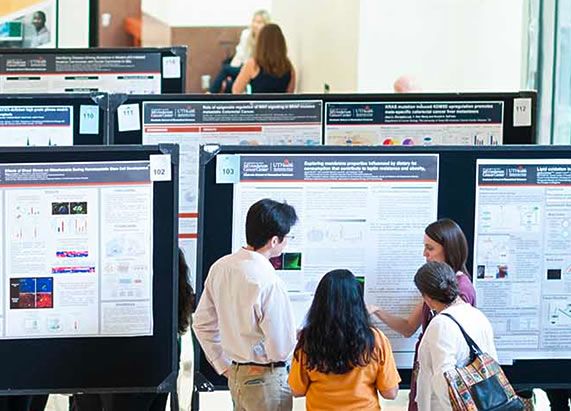
At the core of the program is a two-part workshop series that teaches students how to review proposals and culminates in a mock National Institutes of Health (NIH)-style study section. Students attending the program learn about review structure, scoring criteria, and strategies for success when applying for nationally competitive fellowships. Participants then submit their research proposals and are assigned up to three of their peers’ proposals to review using NIH-style criteria such as research importance, feasibility, and rigor. Students bring their written critiques for discussion to a live study section.
Sessions are designed to closely mirror the NIH review process. Students lead the discussion, collectively scoring proposals and identifying key strengths and weaknesses, while facilitators serve as study section chairs. For many participants, it is their first exposure to how federal grant review panels operate. “We wanted to create an environment as similar to the NIH as possible,” said Herzog. “Throughout a scientist’s research career, they will be evaluated by their peers. The earlier students can understand that process and participate, the easier it will be for them to enhance their grantsmanship skills.”
Building confidence through peer feedback
Importantly, study sections bring together students from a wide range of biomedical disciplines, challenging participants to communicate their science clearly and effectively to a broader scientific audience. By combining peer-driven feedback with real-world review structures, the program helps demystify the funding process and builds confidence as students prepare to submit their work for competitive funding opportunities.
The Graduate School plans to continue and expand the Peer Review Challenge program and is excited to further support trainees in developing the skills and confidence needed to succeed in today’s funding landscape. As Aballay noted, “One of the goals of the Graduate School is to prepare students to not only do excellent science but also to communicate it competitively. This initiative provides students with hands-on experience in proposal writing, peer review, and mock study section discussions, all of which are essential skills for future careers in biomedical research.”
From practice to perspective: what awardees gained from the Peer Review Challenge
"This program was a fantastic opportunity to practice grantsmanship and receive feedback on my writing. It also provided me with valuable insight into the grant review process, which will help me to write grant proposals with review in mind."
— Tyler Bateman
"Participating in the Peer Review Challenge provided me with valuable insight into how study sections operate and how applications get scored. This experience in reviewing applications helped me understand what reviewers are looking for, which directly impacted my writing."
— Sophia Huang
"While working on my fellowship grant application, I got to a point where I was so familiar with what I’d written and the different edits I’d made that it was difficult for me to review it myself. Not only did I get feedback from other students on my writing, but this program helped me reset my view of my writing. After being the reviewer in the study section discussing proposals, it’s easier to go back to my proposal and see it with fresh eyes."
— Megan Tarbet
"I especially enjoyed learning about my peers’ diverse research projects and being exposed to the exciting and innovative science being conducted at GSBS beyond my own field. The discussions were very interactive and engaging, giving me a much clearer understanding of how scientific proposals are evaluated and scored. More importantly, this experience taught me how to structure my own proposals more effectively to highlight key strengths and overall impact for reviewers. I also greatly benefited from the feedback on my own proposal, which provided valuable insight into areas for improvement. Overall, this experience strengthened my ability to think critically about my research and communicate it more clearly, and it has given me greater confidence in developing a more competitive proposal that is closer to being ready for submission to external funding."
— Trisha Wathan