

Advocating for students: Graduate School students serve on UT System Advisory Council
March 25, 2026

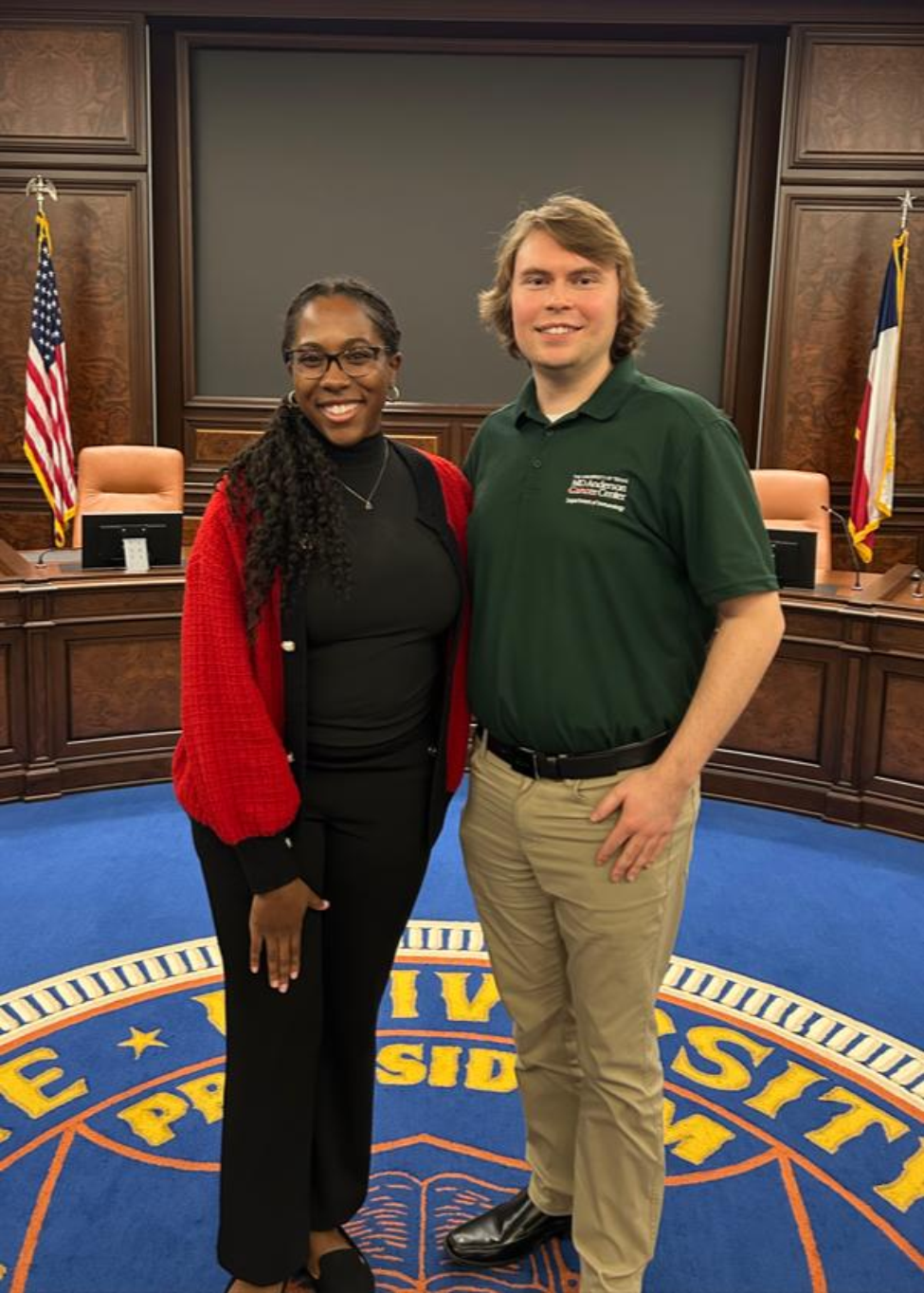
Two PhD students from The University of Texas MD Anderson Cancer Center UTHealth Houston Graduate School of Biomedical Sciences (GSBS) are helping ensure student voices are heard at the highest levels of the University of Texas System through their service on the UT System Student Advisory Council (UTSSAC).
The council brings together student representatives from UT institutions across Texas to discuss student issues and develop recommendations that are presented annually to the UT System Board of Regents. This year, the Graduate School is represented by Genetics and Epigenetics student Llaran Turner, who serves as UTSSAC secretary, and Immunology student Guillaume Trusz.
Together, they contribute to conversations on topics ranging from career development and student support services to emerging issues like artificial intelligence (AI) in education.
Leading and coordinating council efforts
As UTSSAC secretary, Turner helps keep the council’s work organized and moving forward. She maintains meeting records, compiles notes from undergraduate and graduate committee chairs, and assists in developing recommendations for the Board of Regents.
Turner joined the council after applying to serve as a student representative and was later elected by her peers to the executive board. She was motivated by a desire to better understand how student support differs across UT campuses — and how it can be strengthened.
“GSBS does such a great job with career preparation and social support,” she said. “I have friends at other schools who don’t have that same support, so I wanted to do my part to help advocate for other students.”
Previously serving as Graduate Committee Chair also helped prepare her for the position.
“I came in already aware of previous issues students had, so I was able to serve as a guide for both committees.”
Expanding advocacy beyond GSBS
Trusz serves as a UT MD Anderson Graduate School representative on the council, where he advocates for student concerns and contributes to collaborative discussions focused on addressing shared challenges across the UT System.
His involvement builds on several years of student leadership. He has served as Domestic Ambassador for the International Student Association, supporting and integrating the international student community, and contributed to the Immunology Program committee by assisting with recruitment and organizing the program’s annual retreat.
When the opportunity arose to serve at the system level, he saw it as a natural extension of his commitment to student service.
“The chance to serve students beyond my home institution and contribute to broader, system-wide conversations aligned naturally with my longstanding commitment to service,” Trusz said. “I value the responsibility of advocating for my peers, and I am grateful for the trust placed in me by the institution to serve in this capacity.”
Addressing key challenges affecting students
Recent council discussions have focused on expanding career development resources for graduate and health professional students, improving support for basic needs, and addressing the growing role of AI in education.
As a Generation 1.5 student who has navigated multiple educational systems, Trusz brings a unique perspective to council discussions. In his own biomedical research, he has used AI tools to predict protein-protein interactions, shaping his views on how the technology can support academic work.
Rather than restricting AI, he emphasizes the importance of clear, consistent guidelines that help students use it responsibly.
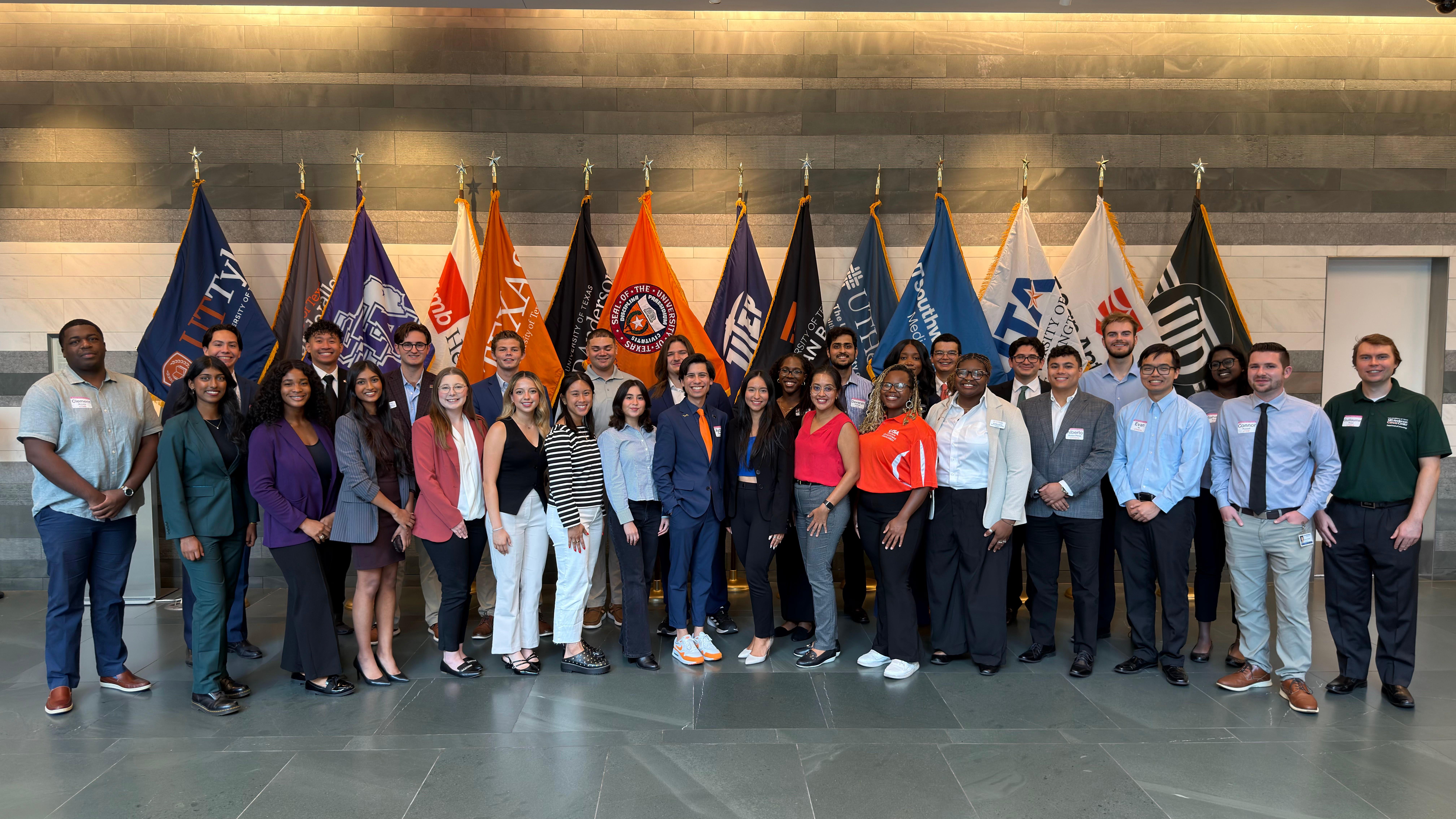
UT System Student Advisory Council’s first meeting for the 2025 school year.
Why student voices matter
For Trusz and Turner, ensuring that policies reflect real student experiences is central to the council’s work.
“Students are the most impacted by policy changes, so it is important that we have a say in how these policies can be shaped to help us,” Turner said.
Beyond the policy discussions, both students say one of the most rewarding aspects of serving on the council has been connecting with student leaders from across Texas and learning from their perspectives.
“Engaging in thoughtful one-on-one conversations — particularly with undergraduate representatives — has been both inspiring and energizing,” Trusz said. “It has reinforced my optimism about the next generation of leaders and the value of cross-institutional collaboration.”