
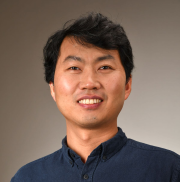
Eunsu Park
Assistant Professor
The University of Texas Health Science Center at Houston
McGovern Medical School
Department of Neurosurgery
I received a PhD in Neuroscience from Kyung Hee University in Seoul, South Korea, studying the role of the transient receptor potential vanilloid 1 (TRPV1, a pain receptor) in microglia and astrocytes in Parkinson’s disease (PD). During the postdoctoral training period, I received training in the mechanisms of α-synuclein-mediated neurotoxicity in PD and in the effective medical management of levodopa-induced dyskinesia (LID) in PD patients. Afterward, I received training on the microglial colony-stimulating factor 1 receptor (CSF-1R) and its ligands in brain development and dementia. Since I joined UTHealth Houston, I have received additional training in brain arteriovenous malformations (AVMs) and intracerebral hemorrhage (ICH).
Based on my research experiences, our glia-vascular biology lab seeks to understand how glia (microglia and astrocytes) interact with vascular cells to contribute to critical brain vascular diseases, particularly brain AVM, hemorrhagic stroke, vascular dementia, and aging-related pathology. Notably, our team established a novel sporadic brain AVM mouse model by overexpressing KRAS in endothelial cells, demonstrating that these mutant cells are sufficient to drive vascular malformation, ICH, neuroinflammation, neuronal death, and cognitive dysfunction (Park et al., 2021 Annals of Neurology, PMID: 33675084). GSBS students can gain experience with projects spanning the role of microglia/astrocytes and vascular cells in the context of how KRAS mutations in endothelial cells cause brain AVMs, hemorrhages, and related cognitive dysfunctions. We are also investigating the roles of endothelial cells in Parkinson’s disease pathology. Our ultimate goal is to develop disease-modifying therapeutic strategies that move from bench to clinic.
Education & Training
PhD, Kyung Hee University, 2013