



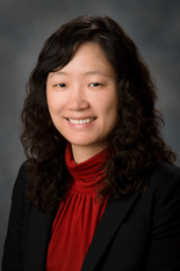
Wenyi Wang
Regular Member
Professor
The University of Texas MD Anderson Cancer Center
Department of Bioinformatics and Computational Biology
Professor Wenyi Wang is a data scientist with expertise in statistics, machine learning and biology. Her laboratory advances statistical bioinformatics to unravel the genetic and transcriptomic heterogeneity of cancer. By developing scalable computational frameworks, her team translates complex multi-omic data (e.g., reflecting DNA-RNA dynamics) into clinically meaningful advances in cancer prevention, prognosis, and precision medicine.
Research Projects
- Multi-Omic Deconvolution and Tumor Evolution The lab builds robust tools for the large-scale analysis of somatic alterations and intratumor heterogeneity.
- MuSE & MuSE2: Software for fast, accurate somatic mutation calling in WGS and WES data.
- CliPP: A tool utilizing penalized likelihoods to efficiently reconstruct subclonal structures.
- The DeMix Family: Deconvolution methods (including DeMixT, DeMixSC, and DeMixNB) that separate mixed cell-type signals in bulk, single-cell, and spatial RNA-seq data to map the tumor microenvironment.
- Cancer Risk Modeling and TP53 Annotation Utilizing machine learning and Bayesian models, the lab develops personalized risk prediction methods, particularly for cancer survivors and patients with Li-Fraumeni syndrome (LFS).
- LFSPRO: An R package providing personalized risk assessment for first and second primary tumors in LFS families, aiding genetic counselors in creating screening plans.
- SCP (Survival-based Clustering of Predictors): A method to group hundreds of TP53 missense variants by their associated early, medium, and late onset of cancer to better understand genetic cancer susceptibility.
Education & Training
Ph.D. - Johns Hopkins Bloomberg School of Public Health - 2007