


Hesham Amin
Professor
The University of Texas MD Anderson Cancer Center
Department of Hematopathology
My laboratory is focused on liver cancers; hepatocellular carcinoma (HCC) in particular. Over the past few years, novel approaches have been developed to cure cancer; however, HCC remains mostly uncurable. For instance, immune checkpoint inhibitors (ICI) were approved by the FDA as first line therapy for advanced, surgically unresectable HCC. Subsequently, it was found that ICI yields a modest increase in overall survival (OS) and progression free survival (PFS).
We are interested in deciphering the mechanisms underlying the pathogenesis of this aggressive neoplasm, with the hope that this approach will eventually lead to improving its dismal outcome. In line with this, using in vitro and in vivo experimental methods, we have described for the first time the role that growth hormone receptor (GHR) signaling plays in the development, progression, and therapy resistance in HCC. More recently, we found that inhibition of GHR signaling potentiates the effect of kinase inhibitors and ICI. These observations were developed based on preclinical studies in different HCC mouse models including xenografts in immunocompromised mice as well as experiments in other immunocompetent mouse models that we established in the lab.
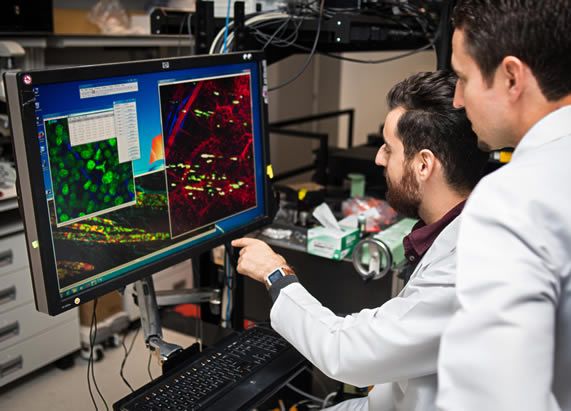
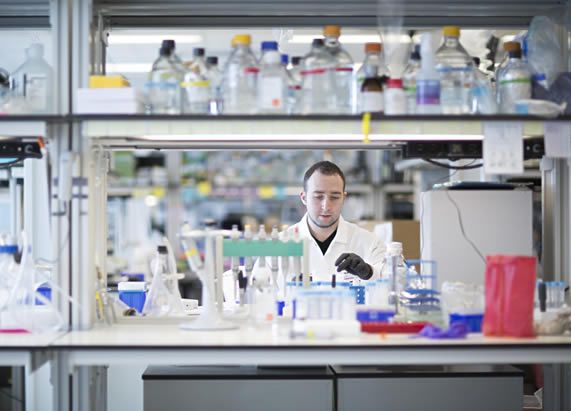
At the clinical level, my lab also collaborates on clinical trials that examine the effects of novel systemic strategies to treat HCC, including neoadjuvant systemic therapy at the early, resectable stage as well as systemic therapy during the advanced, unresectable stage. In order to achieve our goals, we use in vitro experimental approaches including cell culture, immunohistochemical and immunofluorescence staining, flow cytometry, ELISA, Western blotting, RT-PCR, seqIF staining in the COMET platform (in coordination with the Flow Cytometry and Cellular Imaging Core Facility at MD Anderson), and spatial metabolites and glycans analysis (in coordination with the Mass Spectrometry Imaging Core Facility at MD Anderson). In our in vivo experiments, we use survival surgery to develop syngeneic, orthotopic tumors, and imaging techniques such as MRI to monitor the development and growth of the tumors, and CT to monitor liver fibrosis. Systematic analytical approaches are utilized to study biomarkers of response and resistance in the liver tissues, plasma and PBMCs collected from the mice.
Education & Training
MD, Cairo University Faculty of Medicine, 1982